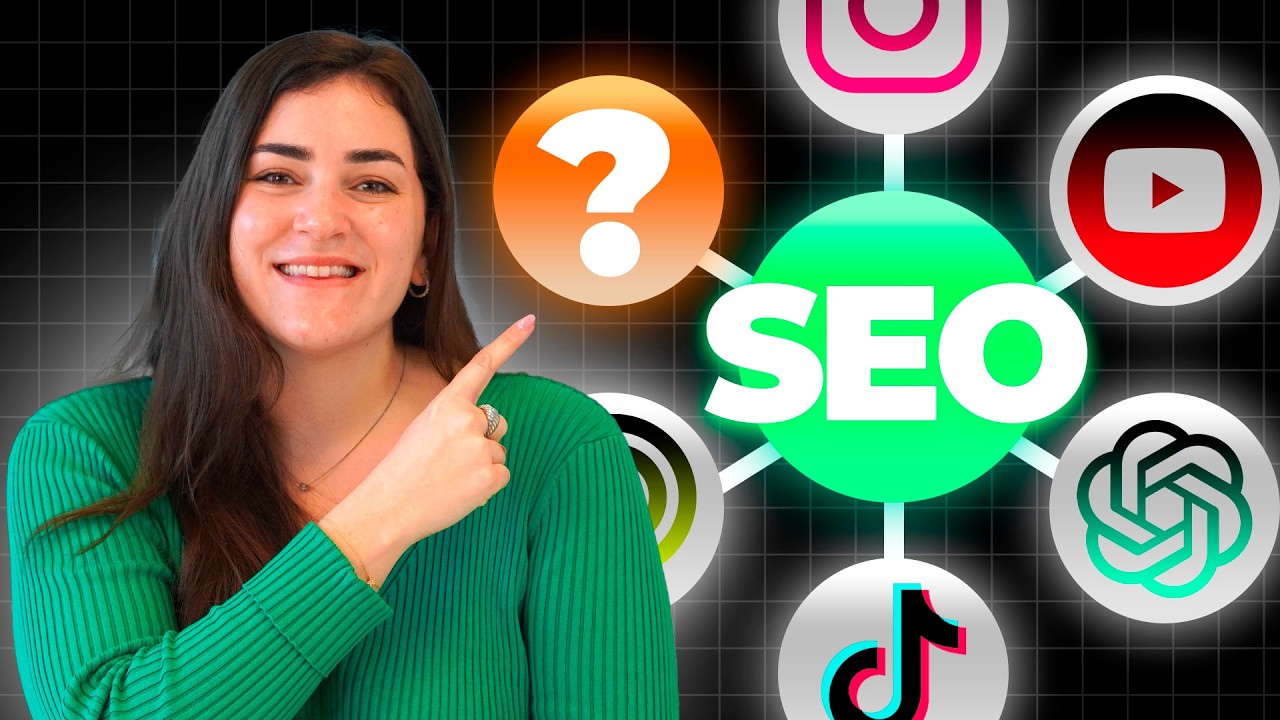
Is SEO Dead? Meet OSO: The New Strategy to Rank on Google, TikTok, YouTube & ChatGPT (2025)
For years, SEO was all about optimizing content
for search engines like Google. But things have changed — big time. Today, people search
for information everywhere: on social media, video platforms, and even AI-powered tools.
That’s where Omnisearch Optimization, or OSO, comes in. It’s the next step in
SEO—an approach that looks beyond Google and considers every place users search for
information. Whether it’s TikTok, Instagram, or AI chatbots like ChatGPT and Perplexity,
OSO helps you show up where it matters. Stick around to learn more about this new
strategy we’re launching at Cyberclick. What is Omnisearch Optimization (OSO)?
It’s a broad strategy that goes beyond traditional SEO to keep up with today’s diverse
and fragmented digital landscape. Instead of just focusing on search engines, it helps content show
up across multiple platforms and formats, making sure it reaches the right audience everywhere.
At Cyberclick, we are already witnessing this shift: almost 50% of our leads come from social
media platforms like LinkedIn and YouTube, and in December 2024, we received 460 visits
from ChatGPT, generating several leads, including four highly qualified ones.
That’s why it’s essential to understand where our target audience looks for information,
what type of content they consume, and which platforms they spend most of their time on.
For example, an industrial machinery company that only focuses on technical blogs will miss
out on customers searching for tutorial videos on YouTube.
The key is to be present where your
buyer persona is searching for information. What are the Essential
Channels in an OSO Strategy? Let’s start with social media. TikTok and
Instagram have become true search engines, especially for younger audiences who prefer
visual content. LinkedIn, on the other hand, is essential if you work in the B2B sector. And we
can’t forget X and Facebook, which remain relevant for connecting with specific audiences.
Regarding video content, YouTube continues to be the king for tutorials and educational
content, while short formats like TikTok and YouTube Shorts are gaining traction due to
their ability to capture attention quickly. Another channel revolutionizing search behavior
is generative chat platforms like ChatGPT, Perplexity, and Claude.
More and
more people use these tools to get personalized answers in seconds.
If you sell products, you can’t ignore marketplaces. Amazon, AliExpress, and
others have their own internal search systems where you need to stand out.
For local businesses, optimizing your presence on Google Maps or Yelp is
essential. And if you have an app, ASO- App Store Optimization- is just as important
as SEO to ensure you’re found in app stores. Forums like Reddit and Quora are excellent for
addressing your audience’s specific questions. Finally, podcasts and video podcasts are
experiencing massive growth, offering a unique way to connect emotionally with your audience.
Optimization Strategies by Channel Now that we know the key channels, let’s explore
how you can optimize your presence on them. For generative chat platforms like ChatGPT
or Perplexity, the most important thing is to create clear and structured content.
Use
conversational language and include frequently asked questions in your texts. These assistants
look for high-quality, relevant information, focusing on sources that clearly answer user
questions instead of just getting clicks. Trust is important, so it favors well-known and reliable
websites. It also considers user-generated content from sites like Reddit but balances it
with expert sources to ensure accuracy. Several technical factors affect how sources are
ranked. For example, Perplexity scans web pages and pulls out the most useful information.
It gives websites trust scores to filter out low-quality content and updates certain sources
more often to keep information fresh. Some types of sources are ranked higher. Lists like “best
of” rankings are useful because they are easy to summarize. Awards and industry recognition
add credibility.

Review sites like G2, Clutch, and TrustPilot help evaluate products and
services, while Google Business Profiles and Yelp are useful for local business searches.
So by focusing on these you also will improve your ranking in AI-powered search tools.
On social media, adapt your message to each platform’s unique language. What works
on LinkedIn may not work the same way on TikTok. Analyze which content generates
the most engagement on each network and replicate that format with your own twist.
For video content, the key lies in the first few seconds. You need to capture attention
immediately with a strong hook.
Optimize your titles with relevant keywords and create
eye-catching thumbnails. But remember: your content must deliver on its
promises, or you’ll lose credibility. For podcasts, leverage their versatility. A
single episode can be transformed into multiple pieces of content: short clips for social media,
transcriptions for your blog, or standout quotes for Instagram. This allows you to maximize reach
without constantly creating content from scratch. Traditional Methods That Remain Relevant
Despite all these innovations, content marketing remains essential for attracting
organic traffic. Blogs continue to be valuable tools for generating evergreen, technical, and
SEO-optimized content. Likewise, pillar pages and topic clusters help organize content, improving
both user experience and brand authority. Lead magnets and webinars are still highly
effective for converting web traffic into known users. Lead magnets—whether downloadable
guides, ebooks, or industry reports—are ideal for capturing data from qualified users.
Meanwhile, webinars offer real-time interaction, establishing the brand as an expert in its field.
We also can’t overlook industry reports and studies, which reinforce brand
authority in specialized topics and position it as a leader in its industry.
And of course, paid actions such as social media advertising and Google Ads campaigns remain
crucial for amplifying visibility and accelerating the results of organic strategies.
Integrated Content Strategy To implement OSO efficiently, we recommend
starting with blogs and pillar pages to attract organic traffic.
Then, you can amplify
their reach using social ads and SEM campaigns. A key point is learning to repurpose content.
For example, you can take snippets from podcasts and webinars and turn them into clips
for social media, adapting each piece to the particular style of each platform.
Remarketing techniques and programmatic advertising are also effective for
promoting your lead magnets to users who have already shown interest in your brand.
Short videos are a powerful tool for capturing initial attention and then directing
that traffic to more extensive content or specific products you want to promote.
And remember: you don’t need to be everywhere. It’s better to have a strong
presence on three or four key channels where your audience truly is than to have a
mediocre presence on ten different platforms. Omnisearch Optimization, or OSO, is a necessary
response to today’s evolving digital landscape. It’s important to understand that every
channel should support the others, creating a synergy that amplifies your reach and impact.
The present and future of digital marketing require a comprehensive approach—one that covers
all the places where your audience is searching. The future is now, and it’s omnipresent.
Thank you for watching the video.
Up next, we’ll explain another key strategy:
People-Led Marketing. Subscribe to our channel to stay up to date with the latest
in digital marketing. See you next time!.